

If you’re working with heat transfer vinyl (HTV) on PVC, waterproof materials, or BioThane webbing, you know how crucial it is to protect your materials from heat damage. Today, we’ll show you a simple yet effective method: using a silicone mat. This versatile tool not only shields your webbing but also ensures a smooth, even application of HTV. Let’s dive in!
In our crafting journey, we’ve experimented with various methods to protect PVC, waterproof, and BioThane webbing while applying HTV using a heat press. We ‘ve tried using parchment paper. While it provides some level of protection, we often encounter uneven heat distribution, which leads to inconsistent HTV adhesion, and more importantly, occasional scorching/marking of the webbing.
We’ve also used Teflon sheets. These options offer better protection than parchment paper, but we still face challenges with heat consistency, pressure distribution and also often leaving marks on the webbing.
This site contains product affiliate links. We may receive a commission if you make a purchase when clicking one of the links.
The Solution
After much trial and error, we discovered the game-changing solution: the silicone mat. Here’s why the silicone mat stands out as the perfect method for applying HTV to PVC, waterproof, and BioThane webbing:
Benefits of Using a Silicone Mat
- Heat Resistance: Silicone mats are designed to withstand high temperatures, ensuring that the heat press does not damage the webbing material.
- Even Heat Distribution: The mat evenly distributes heat across the entire surface, ensuring consistent HTV adhesion without scorching.
- Pressure Distribution: Silicone mats also help in evenly distributing the pressure from the heat press, preventing any creases or bubbles in the HTV application.
- Reusable and Durable: Unlike parchment paper, silicone mats are reusable and durable, making them a cost-effective solution in the long run.
- Non-Stick Surface: The non-stick properties of silicone prevent any HTV residue from sticking to the mat, ensuring a clean and professional finish every time.
This is how we use the Silicone Mat when applying HTV on BioThane:
Higher Heat Setting
Since the Silicone Mat protects the webbing, we increase the heat a little bit more then usual on the Heat Press (We used 150c / 300F in this example). But you’ll have to experiment a little bit and find out what works best for your Heat Press and the HTV you’re using.
HTV and Heat Press Used
We used Siser EasyWeed HTV and a Clam Shell Press
Silicone Mat Used
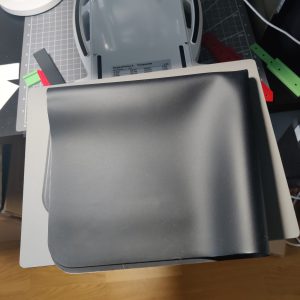
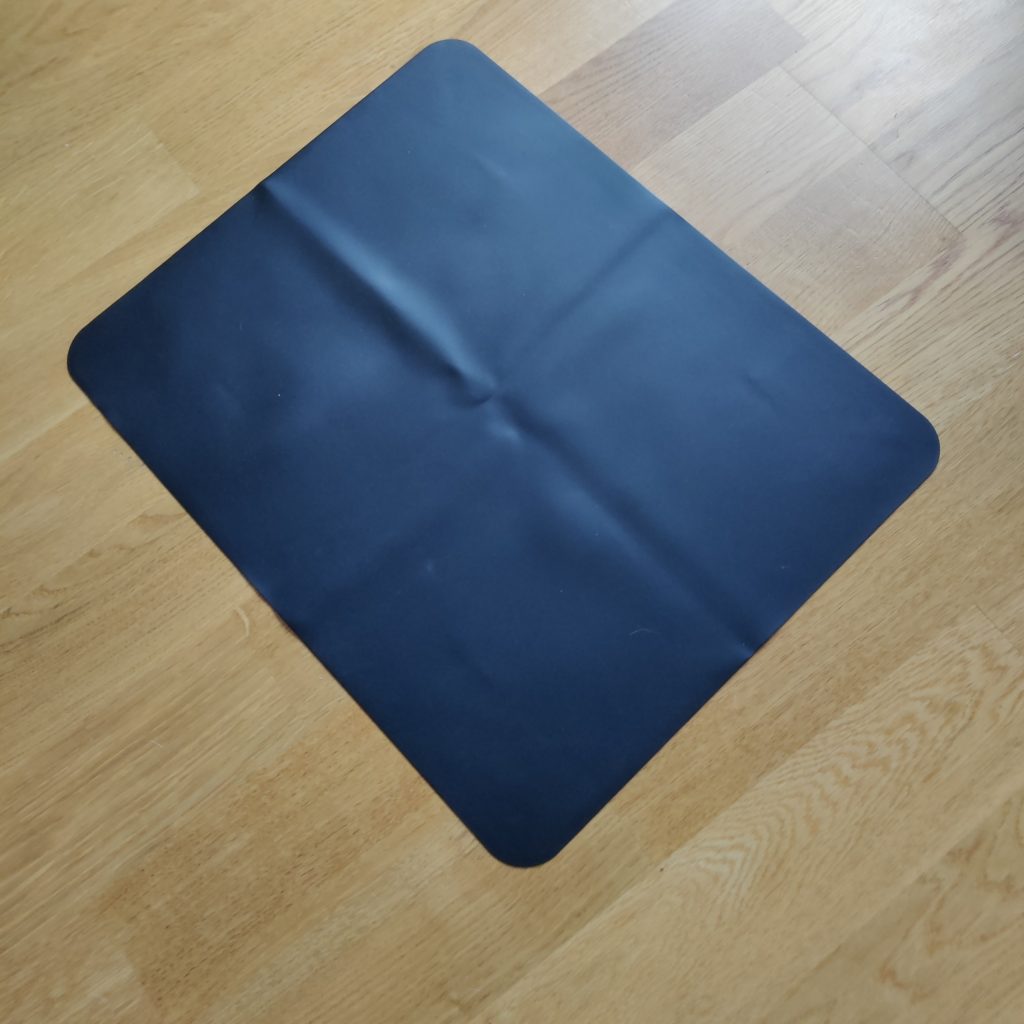
- The Silicone Mat we use is big enough to cover the whole press tray when used, 50×40 cm and 1 mm thick, but the important part is that it should be big enough to cover the webbing you’re working on. Even though all silicone is said to be heat resistant, make sure the mat you’re getting is advertised as Heat Resistant.
Preparations
Cut and prepare the HTV (we use Silhouette Cameo), and place it on your webbing (don’t forget to clean the webbing first)
Silicone Mat
Carefully place the Silicone Mat on top of the webbing + HTV (careful not to shift the HTV around), if the mat is bigger then your press, don’t double fold it, only use one layer of the mat.
Pressing
Press for 3-4 seconds, then remove/life the press, lift one corner of the Silicone Mat up and check if you can remove the carrier without the text/graphics lifting from the webbing.
Checking the results
If the HTV seems to have stuck to your webbing, lay down the Silicone Mat over the webbing again and press for 1-2 more seconds (just to be sure it’s correctly applied)
Check out these Heat Resistant Silicone Mats
